
Esséncia Active Bookshelf and KEF R3 Meta: Two Different Routes
Sometimes the moment that draws us into a recording is very small: a breath before a phrase, the texture of a bowed string, the fading resonance after a piano note. These are the moments behind our approach to Active Bookshelf. We want the musical line to remain easy to follow, with detail that belongs to the performance rather than competing with it.
At Esséncia, we prefer Active Bookshelf for the qualities we hear most clearly in our own listening: more prominent fine detail in the treble, an open soundstage and a light, natural presentation. Here we explain why that combination makes Active our choice alongside KEF R3 Meta—and how its integrated design supports our musical priorities.
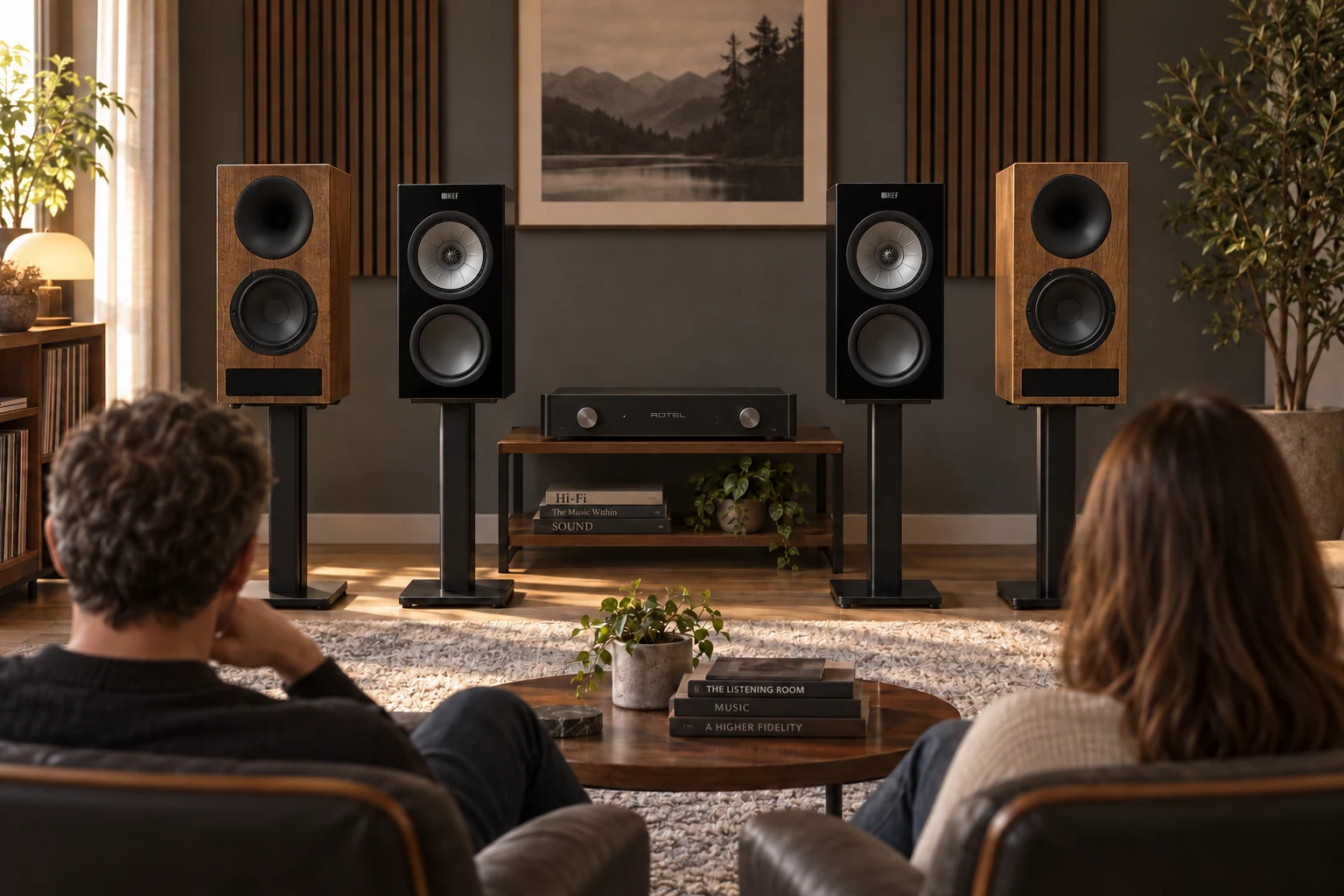
1. Begin with the system, not a score
R3 Meta is a passive three-way bass-reflex loudspeaker. It combines KEF’s Uni-Q midrange-and-tweeter assembly with a separate bass driver and requires external amplification. That gives the owner a separate amplifier choice as part of building the system. KEF product specifications.
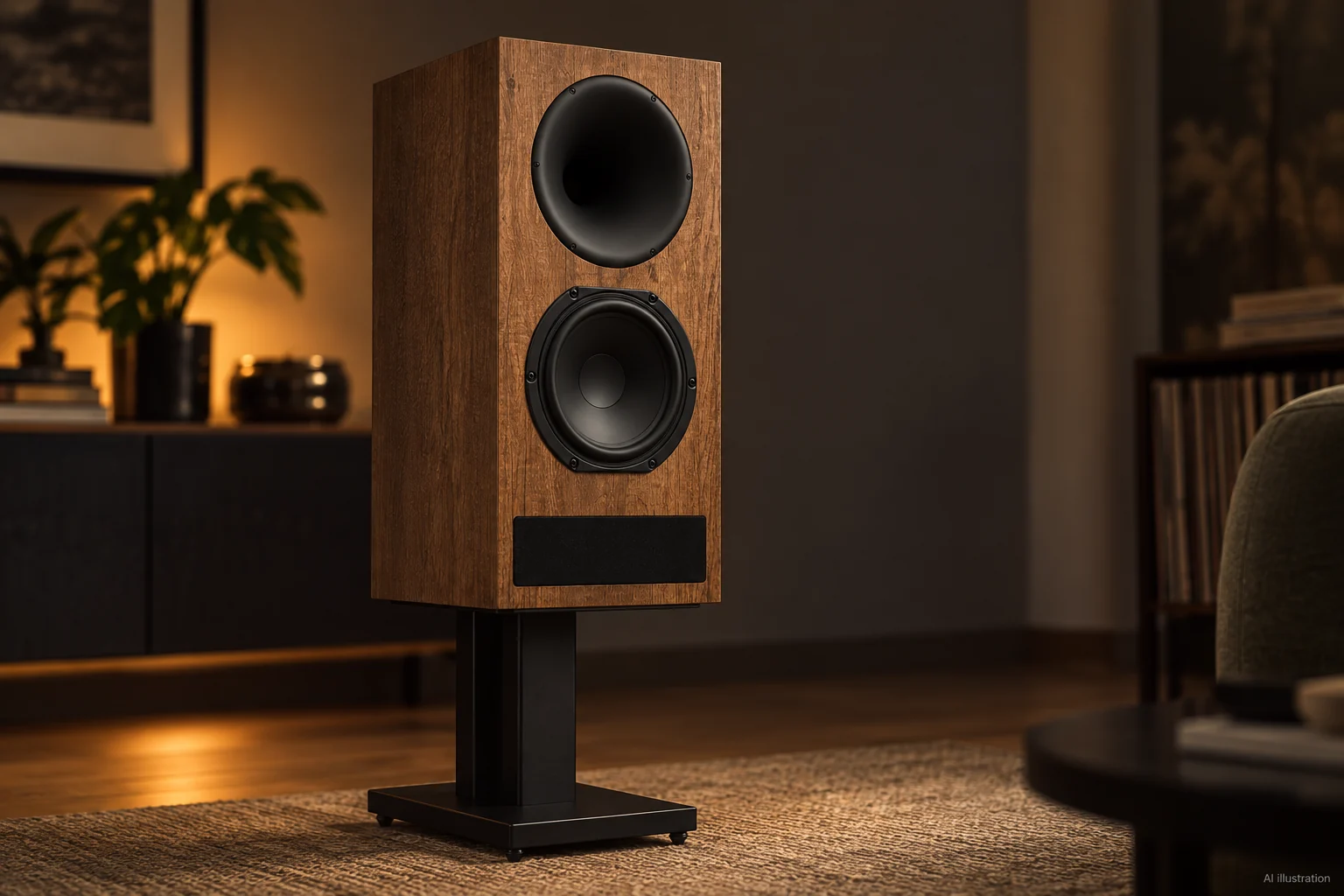
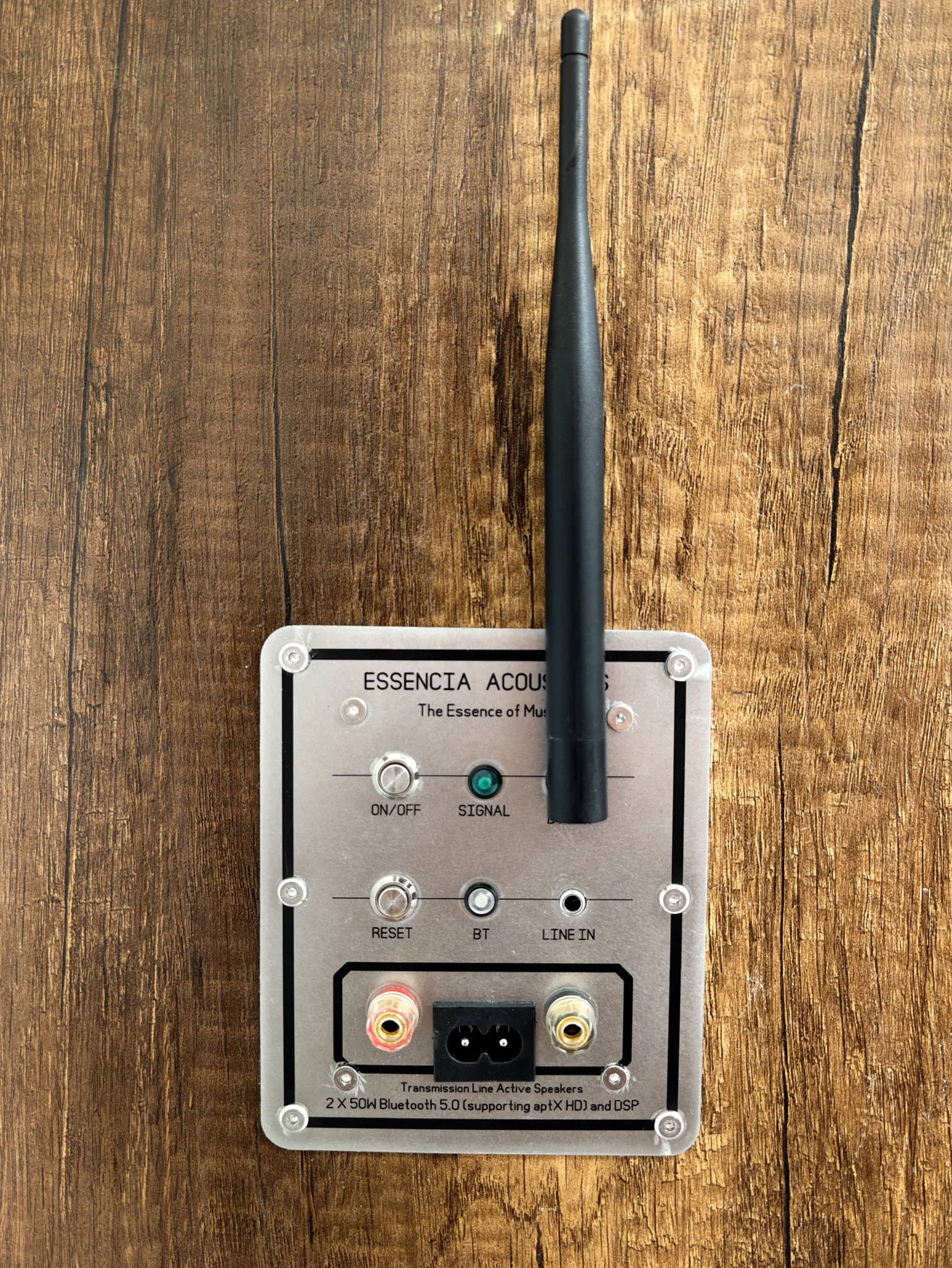
Active Bookshelf brings amplification into the speaker system, using an amplifier from Sure Electronics. Line input and Bluetooth connectivity make it straightforward to connect your music. Our high-frequency assembly combines an AMT tweeter with a horn developed by Esséncia, bringing the driver, acoustic profile and amplification together in one individually built system.
For someone choosing between these routes, the practical question is simple: do you want to assemble a system around a passive pair, or would you prefer amplification integrated into the loudspeaker system? Neither arrangement decides sound quality on its own, but it changes what you need to connect and how you build the rest of the system.
2. Why we prefer Active’s presentation
In our listening, Active’s advantage over R3 Meta is the way it brings small musical details into focus. The upper register feels more present: the breath behind a voice, the shimmer of a cymbal and the lingering texture of a string are easier for us to follow. We hear a sense of immediacy that keeps the performance vivid at everyday listening levels.
That immediacy is a listening impression of clear attacks and articulation. A piano note has a distinct beginning; a plucked string retains its texture as it fades. For us, this makes Active feel responsive and expressive without having to turn the volume up to find the detail.
Our preference is also about the whole tonal picture. We hear Active as lighter, more naturally integrated and less tiring over a long session. For listeners who share these priorities, this combination of presence, openness and ease is where we believe Active has the stronger musical appeal.
For context on R3 Meta, readers can consult the KEF specifications, What Hi-Fi? review and Erin’s Audio Corner measurements. The preference described here is our own at Esséncia.
3. Active: texture, intimacy and an unobtrusive foundation
We hear Active’s bass as velvety and supportive. It gives a double bass body and a piano its foundation while leaving room for voices and upper harmonics. The attraction is the shape of the bass line: the beginning of each note, its development and its release, rather than a constant weight beneath every recording.
Instrumental separation is another quality we value in Active. In a small jazz ensemble, we can follow the double bass, piano and percussion while still hearing musicians playing together. The soundstage feels wide and open, with space around individual instruments rather than a crowded centre.
Vocals are central to this presentation. Small changes in breath, articulation and intensity give a familiar recording its human character. In our listening, Active makes these details particularly engaging, combining a clear presence with an easy, natural tone.
We develop the AMT-and-horn assembly as part of a complete acoustic system. Phase integration, crossover behaviour and dispersion are priorities in that work: the aim is for the drivers to speak coherently and for the presentation to remain open across a useful listening area. Room layout and speaker placement remain part of achieving that result.
4. What we mean by balance
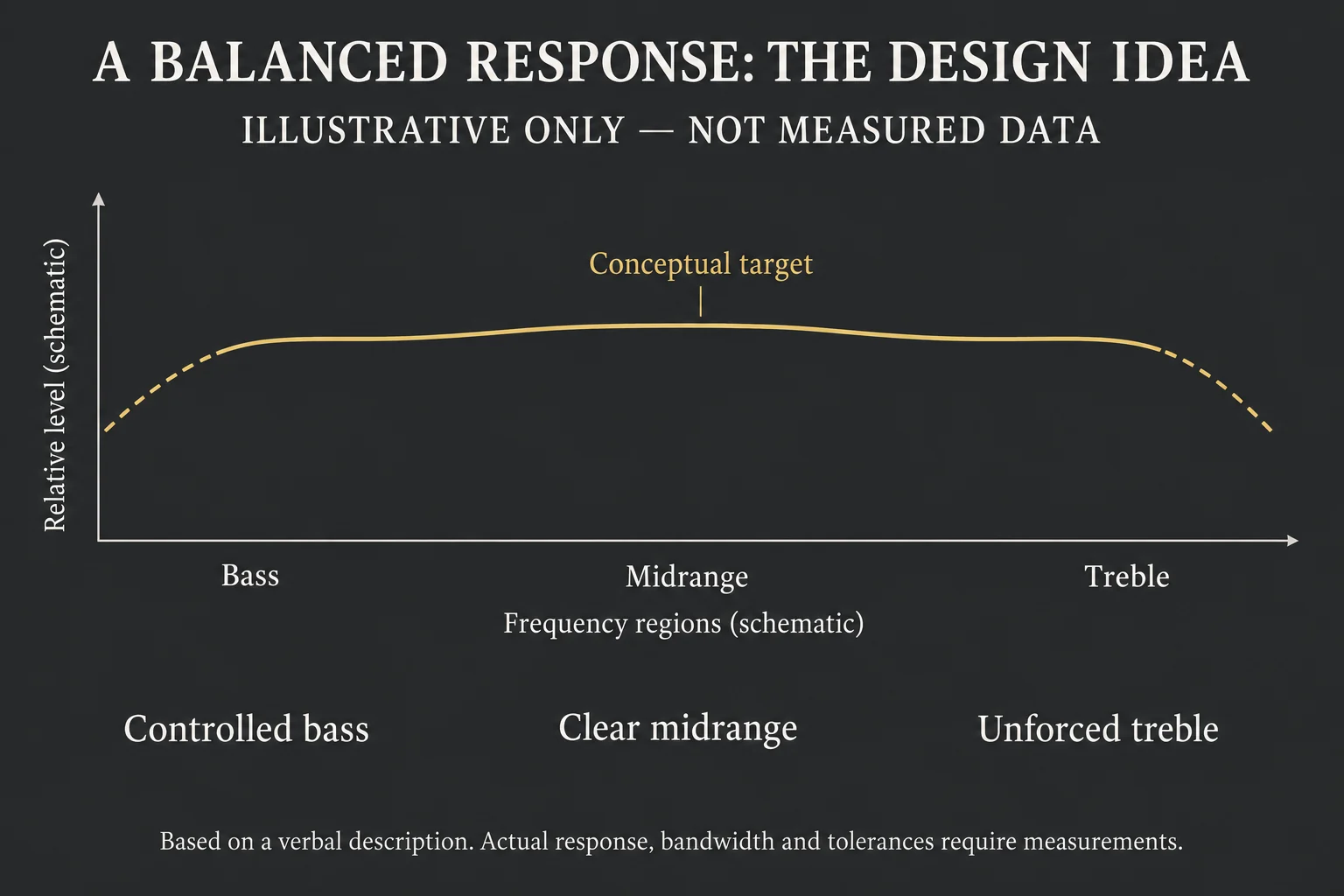
We tune Active for an even response across its operating range and a harmonious relationship between bass, midrange and treble. In our listening, the low end supports the music, voices keep their body and the upper register stays expressive without dominating the performance. The curve below illustrates this tonal balance.
5. Which music brings this approach into focus?
Jazz, blues, classical music and vocal recordings bring our favourite qualities of Active into focus. Listen to the texture of a saxophone, the body of a cello or a singer accompanied by a single guitar. For us, Active’s appeal is the combination of fine detail and an unforced musical flow.
Try a voice accompanied by only one instrument. Then move to a busier arrangement. Does the voice remain easy to follow? Can you hear the bass line without increasing the volume? Does a cymbal’s decay remain part of the music rather than drawing attention to itself?
For films, listen to the intelligibility and naturalness of dialogue alongside the soundtrack. Connection compatibility and the desired bass impact should be considered separately; a musical presentation alone does not establish home-cinema capability.
Bring the music you actually enjoy, including demanding electronic tracks or dense rock arrangements. Listen at your usual level and from your usual distance. The qualities we value—detail, tonal integration and an open stage—should serve your music and your room.
6. Two routes at a glance
| Question | Esséncia Active Bookshelf | KEF R3 Meta |
|---|---|---|
| How is the system built? | Integrated Sure Electronics amplification | Passive loudspeakers with external amplification |
| High-frequency approach | AMT coupled to an Esséncia-developed horn | Uni-Q concentric midrange/tweeter assembly with MAT |
| What describes the sound here? | Our listening impressions at Esséncia | Linked independent reviews and owner accounts |
| What should you explore? | Treble detail, natural vocal texture, an open stage and listening comfort | Tonal presentation, imaging and suitability with your amplifier and room |
Why Active is our choice
We prefer Active for the combination we hear: expressive upper-frequency detail, a wide and open stage, and a bass foundation that allows voices and instruments to breathe. To our ears, its natural tonal balance and easy presentation make it the more compelling choice for long, attentive listening.
The next step is to bring your familiar recordings and discuss the room, listening distance and volume you actually use. If comparing systems, keep the source material and playback level consistent and listen to one pair at a time. Let the music answer the question that a score cannot settle for you.