
Choosing an Amplifier Without the Guesswork
Esséncia Journal · System guide · From the workshop
The best amplifier choice begins with the speaker you are buying and the way you listen.
For our passive floorstanders
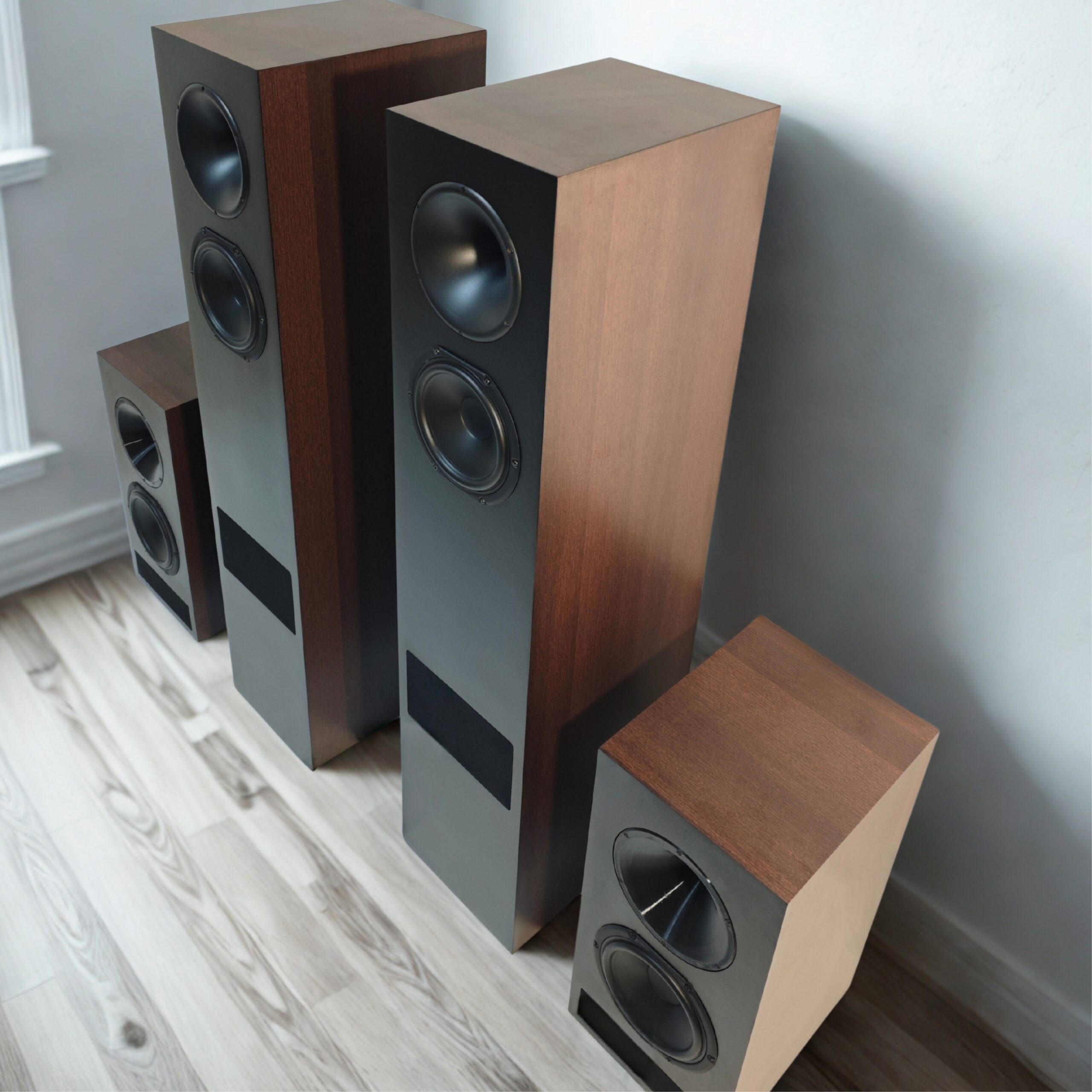
Reality Pro and Orchestra need an external amplifier suitable for their specified 4-ohm load. Our recommended amplifier ranges are 30–300 W for Reality Pro and 30–200 W for Orchestra. These are selection guides, not a reason to run an amplifier at maximum output.
Look for a clear manufacturer specification into 4 ohms, adequate ventilation and the inputs you need. An integrated amplifier can make a simple system: source, amplifier and speakers. A separate preamplifier and power amplifier adds flexibility but also more boxes and connections.
For the active bookshelf pair
The current active model includes its own 2 × 50 W amplification and DSP. It needs a suitable line-level source or its supported wireless input, not the speaker outputs of another amplifier. One cabinet powers the pair through their connecting cable.
The class name alone does not tell you how an amplifier will sound with a particular speaker. Compatibility, noise, clean output and good implementation matter more than the label.
Send us the exact make and model of your amplifier, your room size and usual listening level. We will help check the match rather than inventing a list of equipment supposedly used by customers.
Talk to the maker →Explore the speakers
← Back to Journal