
When the Bass Is Too Much
Esséncia Journal · Setup guide · From the workshop
Deep bass should support the song. If one note fills the whole room, the first thing to investigate is the setup.
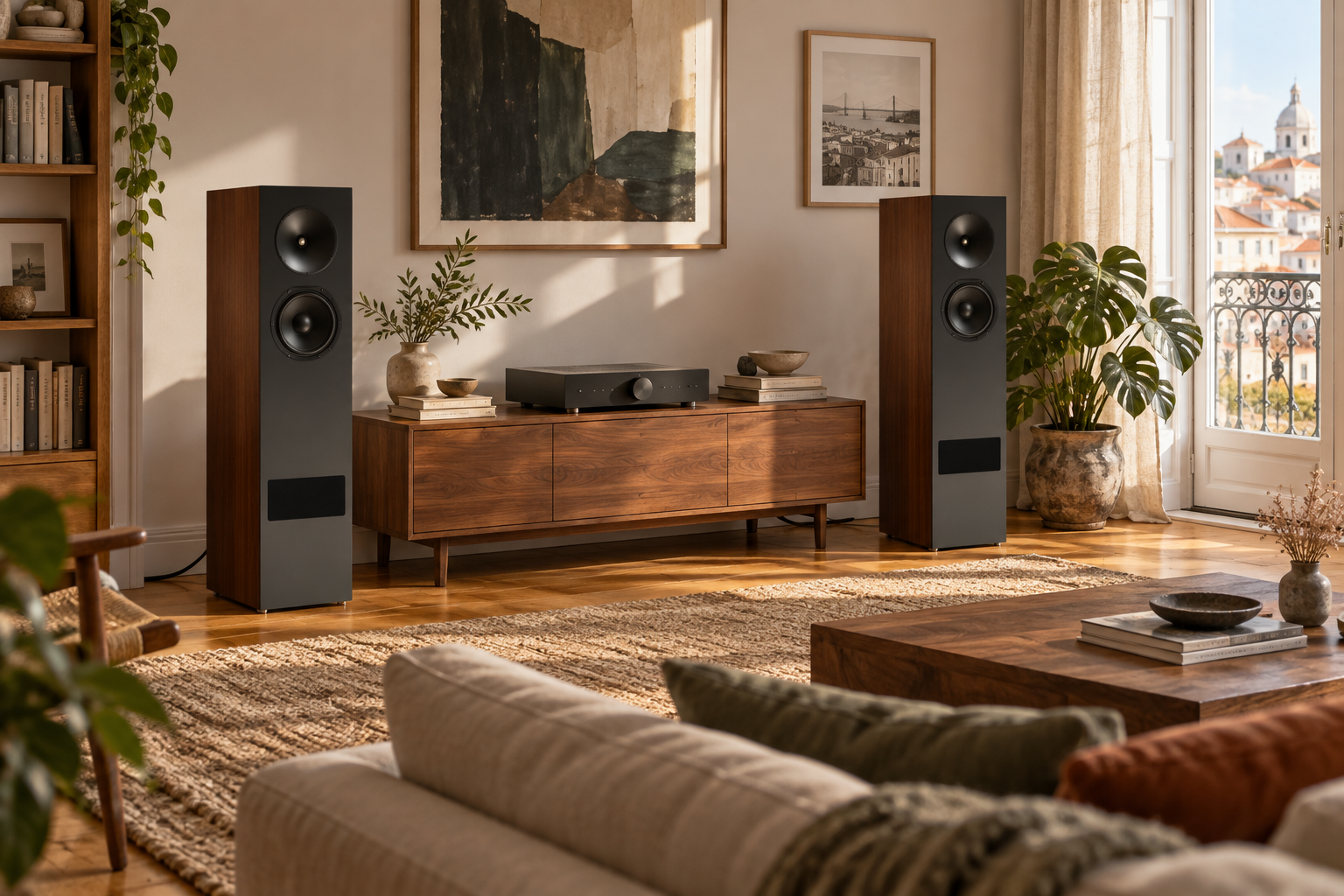
Separate power from boom
Our floorstanding sound is intended to be generous and substantial. In some rooms that character needs care. Boundaries, the listening seat and a subwoofer can all change the balance. A long, loud bass note is not always a sign that the speaker itself is adding too much bass.
Already have a subwoofer?
Begin by listening with it switched off. If the pair alone gives you the weight you want for music, you may prefer that arrangement. If you keep the subwoofer, adjust its level, crossover and timing or phase so the two sources work together. Follow the controls and instructions of your own equipment.
Try a lower subwoofer level before reaching for more expensive cables or a new amplifier. For films, your receiver’s bass management may use a different arrangement from two-channel music.

A listener adds floorstanders to a system that already has a subwoofer. The old subwoofer settings make bass feel excessive. Reducing overlap and adjusting placement can restore balance without losing depth.
Room boundaries can create both peaks and dips; see Genelec’s explanation of room response. If the problem persists, measurements can help identify it.
Talk to the maker →Explore the speakers
← Back to Journal